

Information Flow as Policy
The Hidden Cost of “Bring me solutions”

“Don’t bring me problems, bring me solutions.”
It’s one of the most legendary mantras in leadership. On the surface, it sounds proactive. It sounds empowering. It implies that you trust your team to handle things and that you want to foster autonomy.
But it’s often incredibly wasteful.
The big problem with leaders brushing off direct reports with this phrase is that I believe problems are far more important to align to leadership than solutions are.
When you force your team to package every problem with a solution before they can speak up, you aren’t creating efficiency. You’re creating a filter that blocks valuable signals, introduces delay, and encourages waste.
The Waste of “Empowerment”
I’ve seen too many teams solve problems that had nothing to do with their mandate because they were discouraged from raising the issue to leaders, or worse, encouraged to “DIY” a solution just to seem like they’re not complaining.
This approach generates waste in three specific ways:
The Wrong Problem: Contributors spend time solving problems that shouldn’t be solved at all, or at least not right now.
The Wrong Context: They solve problems that could be solved faster or better by another group (e.g., upstream or platform teams).
The Wrong Solution: Without leadership context, they build a solution that doesn’t fit the broader strategy.
The Wrong Scope: Should it be a quick fix or a major investment?
The Wrong Time Horizon: It may be the right fix for 6 months from now, but today it’s unaffordable.
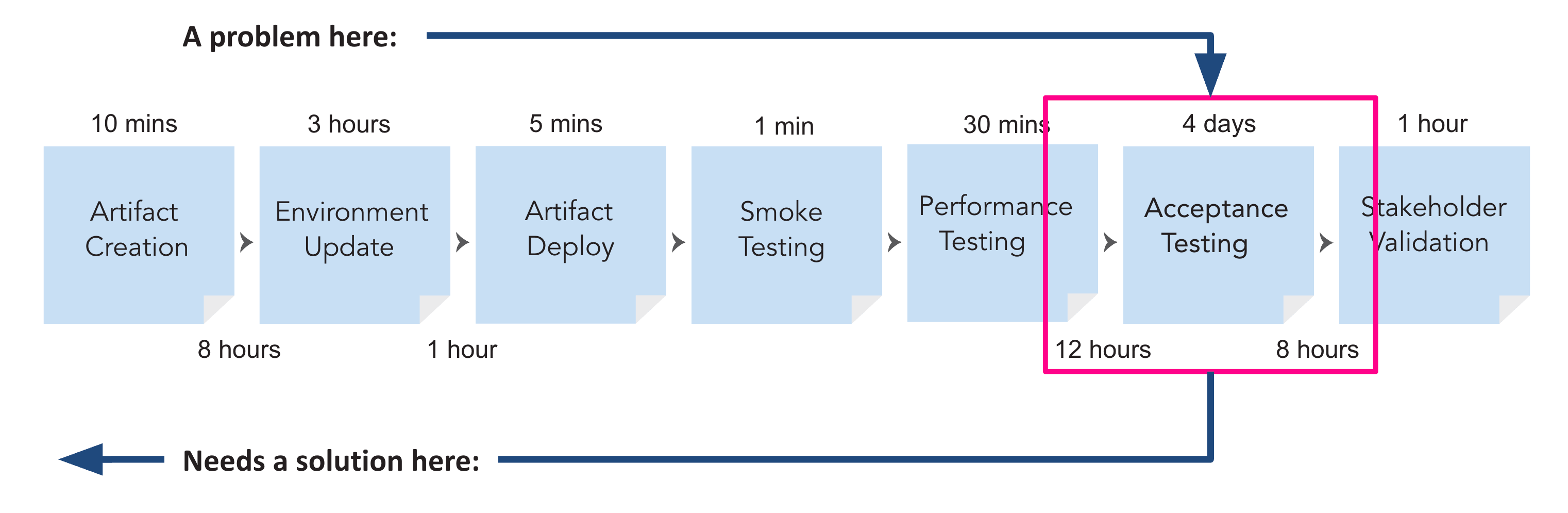
It is incredibly demoralizing for a contributor to find a problem, invest energy into solving it, and then bring that “win” to leadership only to have the value questioned. Or to be told, “That problem wasn’t actually a priority.”
That isn’t empowerment. That’s sabotage.
The Architecture of Truth
A great point was raised in the discussion of this topic by Dr. Koby Glass, who noted that when leaders demand only solutions, they are signaling: “We don’t have the architecture to absorb truth.”
If you want to decentralize decision-making and action, you can’t just demand solutions. You need to ensure your people are solving the right problems in the best way they can be solved.
If a team member spots a fire, you don’t want them to wait until they’ve built a fire truck to tell you. You want to know there’s a fire so you can decide if it needs a truck, a bucket, or if it’s a controlled burn you planned strategically.
Information flow is critical. You need feedback from the front lines to inform your process, capabilities, and operating model. If you shut off the flow of “problems,” you shut off the flow of reality.
Full Kit Problem Triage
So, what is the alternative? You don’t want a culture of complaining, but you do need a culture of signal processing.
If you want true flow, you need full kit problem triage and resolution, along with constraints that enable speed and confidence.
Encourage the Signal: Make it safe to raise problems early. This is “shifting left” on management—catching defects in the workflow before they become expensive incidents or waste.
Align on Value: Before anyone builds a solution, align on the value of the problem. Is this worth solving now?
Empower the Solution: Once the problem is validated, clarified, located, and prioritized, then delegate the solution.
If those systems are in place—if you have the architecture to absorb truth and triage effectively—then you can delegate away with confidence.
But simply saying “bring me solutions” is a shortcut. And in flow engineering, there are no shortcuts that help you skip understanding.
Goldratt sums it up here with his unique perspective by focusing on the value of problem solving skill and developing intuition rather than finding what he calls “superb solutions”:
He highlights the underlying value in problem solving: “How do we activate the brainpower, the intuition, and translate it into feasible solutions?”
Skipping forward to (or even driving towards) the solution may deliver a short term win and seriously compromise long term capability and value.
This is not new, people have said this many times before, but if you’re like me, you often take these things for granted, and there’s a ton of value in thinking more deeply about the condition - before we see it pop up again in the wild.
It’s worth reflecting on your own environment and asking: “How am I creating the conditions for effective problem understanding (rather than just problem solving)?
Speaking of problem understanding and deep thinking - the Flow Leadership Retreat is happening very soon!!

The Flow Leadership Retreat is happening February 8-13 in Cancun, and there’s just 6 spots still available
Start Seeing Your Signals, and Acting Effectively
If your intuition tells you that solutions are hiding the real problem or the larger opportunity, tools like value stream mapping can give you a much broader view of where the real problem lies, and what the problem is made of.
If your teams are burning out on “solutions” that don’t move the needle, it might be time to map your value stream and see where the signals are getting blocked.
Get in touch to start building an architecture that handles the truth.
I love this Steve